What is a condenser microphone? It turns sound into an electrical signal using a charged capacitor, so it needs power. It suits detailed sources such as vocals better than very loud ones.
The sections below explain the mechanism first, then what it means for power, diaphragm size and the choice against a dynamic mic. For the wider gear picture, see our guide to the best microphone for voice recording.
How a condenser microphone turns sound into signal
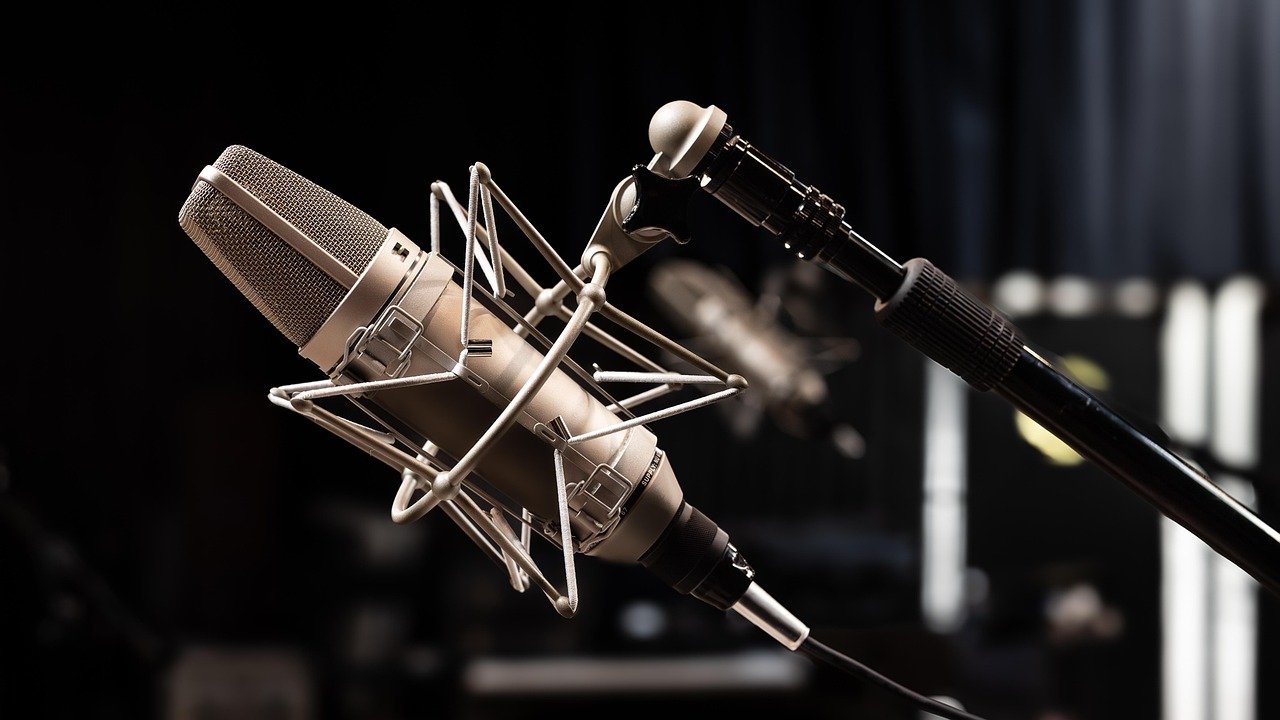
A condenser microphone uses two charged metal plates that form a capacitor. The same source names them: one plate is the diaphragm, the other is the backplate. The diaphragm is the movable front plate and the backplate stays fixed, a layout shared by large- and small-diaphragm condensers alike.

Cause and effect run in a fixed order:
- Sound reaches the diaphragm. The front plate moves in response to the air pressure of the sound.
- The gap changes. Because the backplate is stationary, the movement alters the capacitance of the capsule.
- The capacitance change becomes a signal. In either mic type, as the diaphragm moves, the capsule’s capacitance changes and produces the AC microphone signal.
- Power keeps the capsule working. Without power the capsule is not polarized, so the mic produces nothing useful.
The construction explains the character. Because of the lightweight membrane, condenser mics are more sensitive to sound. That sensitivity is why they are valued for fine detail. It also means the room and the placement matter more, because a sensitive capsule reports what is around the source as well as the source itself. The next question is how that capsule is powered.
Power: what a condenser needs and where it comes from
Yes, a condenser needs power, but phantom power is only one way to supply it. Phantom power supplies direct current to the condenser mic to run its circuit, and it is generally 48 V. The usual source is the mixer or audio interface that the microphone plugs into.
In practice this settles one buying decision before you look at sound quality. If you plan to plug a condenser into an interface, check that the interface offers 48 V phantom power. If it does not, the microphone will sit silent however good it is.
Large-diaphragm and small-diaphragm condensers
Apart from diaphragm diameter, the two types share the same essential parallel-plate design. The size is the dividing line: large-diaphragm condensers (LDCs) are typically 1 in (25.4 mm) or more, while small-diaphragm condensers (SDCs) are typically 1/2 in (12.7 mm) or less. That one difference changes tone, speed and the sources each type suits.
What a large diaphragm adds
Large-diaphragm condensers are often quieter and have more character. Their response includes a slight boost in the presence and upper-frequency ranges, which is part of why they flatter a voice. Large diaphragms also capture a greater amount of low and low-mid frequencies than small ones, adding body.
Typical jobs follow from this: vocals, guitar amps, bass amps, cellos and horns. An LDC suits anyone recording speech or singing who wants a fuller, more characterful sound and is working in a quiet space.
What a small diaphragm adds
Small-diaphragm condensers generally have very fast transient response, and their frequency response is generally very flat and extends beyond the audible range. Producer Society reports Neumann’s view that SDCs are better at transients. That reasoning is secondhand, but it matches the speed described above.
The result is accuracy and consistency rather than flattery. Typical uses are mandolins, violins and percussion instruments. Choose an SDC when the goal is to document a source as it is, not to colour it.
Choosing between them
- Pick an LDC for a single voice or an amp, where warmth and a gentle lift in the presence range help.
- Pick an SDC for fast, detailed acoustic sources where a flat response and quick transients matter more than flattery.
- Do not treat the choice as rigid. The size is a starting point, not a rule, as the FAQ below explains.
Condenser versus dynamic microphones
A condenser wins on detail and output, and a dynamic wins on toughness against loud sources. The table compares them on the criteria that most often decide a purchase.
| Criterion | Condenser | Dynamic | Planning use |
|---|---|---|---|
| High-end frequencies | A lot better at picking up the high end | Less effective at the high end | Choose a condenser when airy top-end detail matters. |
| Very loud signals | Not capable of handling very loud signals as well | Handles very loud signals better | Prefer a dynamic for sources that are extremely loud at close range. |
| Output level | Typically much higher | Lower | Expect a stronger signal from a condenser at the same distance. |
| Sensitivity | More sensitive, thanks to the lightweight membrane | Less sensitive | Room sound and placement matter more with a condenser. |
These comparisons come from Mixing Lessons and Producer Society.
The practical reading is simple. In a quiet room with a talker or an acoustic instrument, a condenser’s detail and higher output are real advantages. Near a loud source, or in a space where you cannot control the sound, a dynamic is the safer choice. Neither is better in the abstract; the source and the room decide.
Choosing and using a condenser
Start with the source, then check the power, then think about the room. A voice calls for a large-diaphragm microphone, an acoustic string instrument for a small-diaphragm one, and a loud source for a dynamic.
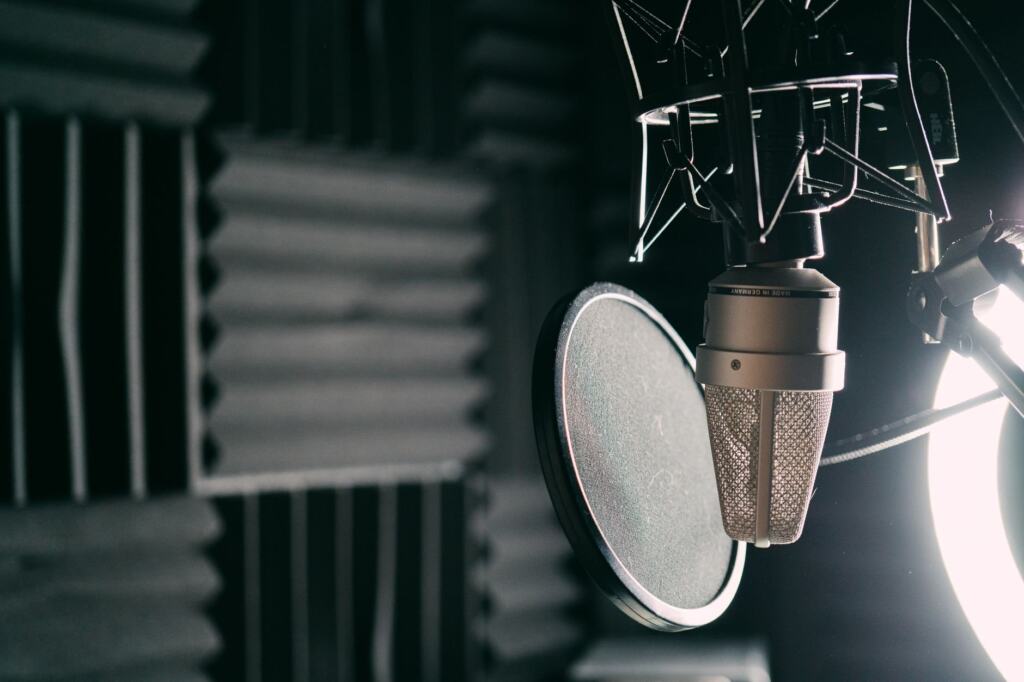
Vocals are the most common starting point. Because a condenser is sensitive, a pop filter between mouth and capsule is a sensible habit. It is a general studio practice rather than a requirement from the sources above.
If the microphone is mainly for a desk, such as streaming or calls, a condenser’s sensitivity cuts both ways. It records clear speech, but it also records the room. Our guide to Best Microphones For Streaming In 2026: Clear Voice, Low Noise, Easy Setup – Voiceoriginals weighs that trade-off for setups where the room is not treated.
Music makers often pair a mic with other tools in a small home studio. What Is a MIDI Keyboard? The Beginner’s Guide to Making Music With MIDI (2026) – Voiceoriginals covers the keyboard side of that setup.
Frequently asked questions
Can a condenser run without phantom power?
Yes, some condenser mics run on an internal battery, while others rely on phantom power from an audio interface or mixer. Check which kind you have before connecting it.
How can I tell a large-diaphragm condenser from a small one by sight?
Small-diaphragm condensers are much thinner, smaller, end-fired and pencil-shaped, and they are usually top-address, though some are side-address. Large-diaphragm mics are bigger and side-addressed.
Do condensers offer more than one pickup pattern?
Some large-diaphragm condensers do. Multiple polar patterns are achieved by combining different amplitudes and polarities of back-to-back cardioid diaphragms.
Can the two condenser types be swapped?
Often, yes. Depending on the source, the two types can in many cases be used interchangeably, so treat the size guidance above as a starting point.