| Decision | Supported detail | Planning use |
|---|---|---|
| Noise floor | Self-noise of 19 dB or less, or an SNR of 75 or higher | Use as a shortlist filter for any voiceover mic before comparing tone. |
| Low-noise benchmark | Neumann TLM 103 lists 7 dB(A) self-noise | Shows how quiet a large-diaphragm condenser can be, well inside the threshold. |
| Budget XLR | Audio-Technica AT2035, in the $200 or less tier | The least expensive XLR mic the guide recommends; a sensible first studio-style mic. |
| Step-up XLR | $200 to $500 tier | Consider once your room and interface are already sorted. |
| USB starter | Movo WebMic USB condenser at $19.95; Movo UM700W at $34.95 with 4 adjustable pickup patterns | Cheapest route to auditions; no separate interface needed. |
| Room | No mic sounds better than the space it is in | Fix noise and reflections before paying for an upgrade. |
Figures come from a voiceover microphone guide at justaskjimvo.studio and Movo’s voice acting microphone listings, with Movo prices as listed by the manufacturer.
The best microphone for voice acting depends on your voice and your room: choose a low-noise XLR large-diaphragm condenser for studio-style work, or a budget USB microphone if you need to start auditioning cheaply.
Gear decisions rarely stop at one mic, so our wider guide to the best microphone for voice recording covers the surrounding kit. The sections below work from practical choices first, then explain the mechanics behind them.
Choosing by voice and role
The justaskjimvo.studio guide finds it difficult to recommend any one specific microphone for every voice, and it sets a simple goal: the microphone should not distract from the voice. That makes the role and the voice, not a brand, the starting point.
Narration, audiobooks and commercial reads
These jobs are delivered as clean, exposed files, so noise is the first thing a client hears. Prioritise a large-diaphragm condenser on XLR with self-noise of 19 dB or less, or an SNR of 75 or higher. A mic that clears that bar leaves your performance and your room as the only variables, which is exactly what you want when the same voice has to stay consistent over many sessions.
Character work
Character performers shift pitch, weight and texture within a single session, so a mic with an obvious tonal signature can flatter one voice and hurt another. A balanced mic that stays out of the way lets you do the colouring. Test any candidate with your whole range, not only your natural speaking voice, before committing to it.
Auditions and early-career work
If the immediate goal is to send auditions this week, a USB microphone removes the interface from the shopping list and the signal chain. It suits actors who value speed over a long upgrade path. Move to XLR when you find yourself limited by the mic rather than by your room or your technique.
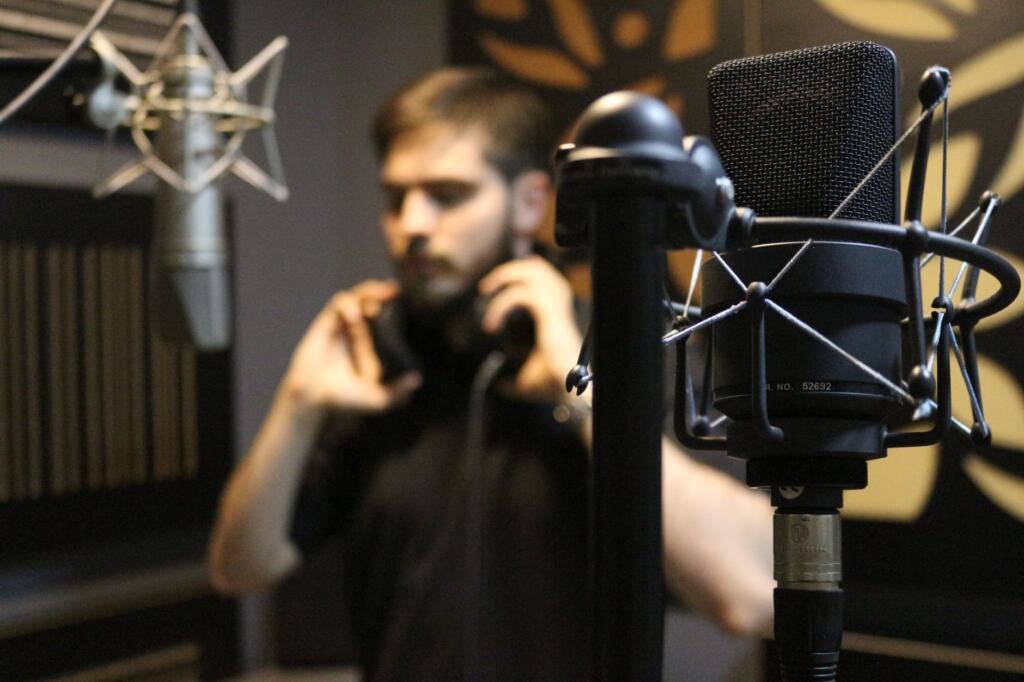
What an XLR setup changes in practice
XLR changes where you can record, how you spend your budget and what you need to buy alongside the mic. Those consequences matter more to most buyers than any single specification.
- Recording location. An XLR cable lets the recording space sit away from environmental noise or loud computers, so the machine can live outside the room you perform in.
- Value for money. The preamp and converter cost sits in the audio interface, which leaves more of the budget for the microphone itself. The guide’s view is that you get more for your investment this way.
- An extra purchase. You cannot plug an XLR mic straight into a laptop. You need an interface, and a condenser also needs phantom power from an XLR-capable device, as with Movo’s $33.95 LV4-C cardioid lavalier, which powers from any XLR device with phantom power.
- Computer demands. A quiet, capable machine supports the whole chain; our guide to the Best Computer For Music Production In 2026: Build Or Buy The Right Rig For Recording, Mixing, And Beatmaking – Voiceoriginals covers that side of the rig.
How self-noise, XLR and the interface work
A large-diaphragm condenser is judged first on its noise floor. Self-noise is the hiss the microphone adds even in silence, and the guide at justaskjimvo.studio looks for 19 dB or less. SNR expresses the same thing the other way round, calculated as 94 dB minus the self-noise rating, so an SNR of 75 or higher is the equivalent test. The Neumann TLM 103 lists 7 dB(A) self-noise, which shows that a quiet large-diaphragm condenser sits comfortably inside the threshold rather than scraping it.
The threshold is a floor, not a target. Passing it means the mic will not be the noisiest element in the chain; it does not mean the mic suits your voice. Use it to cut the list, then choose on how the mic sounds with your own delivery.
The signal path is straightforward. The three-pin XLR connector carries the analog voltage signal from the microphone’s electronics to a separate audio interface. The interface then handles the preamplification and the analog-to-digital conversion needed to get the sound into your computer. A USB microphone folds those stages into the mic, which is why it needs no interface.
USB microphones as a starting point
A USB microphone is good enough to begin voice acting, provided you accept its limits. It is the lowest-cost way to record auditions and demos, but it bundles the electronics inside the mic, so you cannot upgrade the preamp or converter separately the way an XLR setup allows.
Entry prices are low. Movo lists a WebMic USB condenser at $19.95 and a UM700W desktop USB mic at $34.95 with 4 adjustable pickup patterns. Community ratings point the same way: an Amazon listing shows the TONOR TC777 at 4.3 out of 5 stars from 35.4K ratings. Treat that as a sign of broad satisfaction among buyers, not a measurement of noise or tone; check any USB model against the same self-noise logic where a figure is published.
- Choose USB if you need to audition soon, have a modest budget and are still learning technique.
- Choose XLR if you expect to record client work regularly and want an upgrade path, since the interface can stay while the mic improves.
- Wait if your room is noisy; neither type will rescue it.
If you also stream or record on-camera content with the same mic, compare notes in our guide to the Best Microphones For Streaming In 2026: Clear Voice, Low Noise, Easy Setup – Voiceoriginals.
Booth, room and treatment
You do not need a dedicated booth to start, but you do need a quiet space, because no mic will sound better than the space it is in. A booth is one way to get that space. Placing the mic away from noisy computers and outside noise, which an XLR cable makes easier, is another.
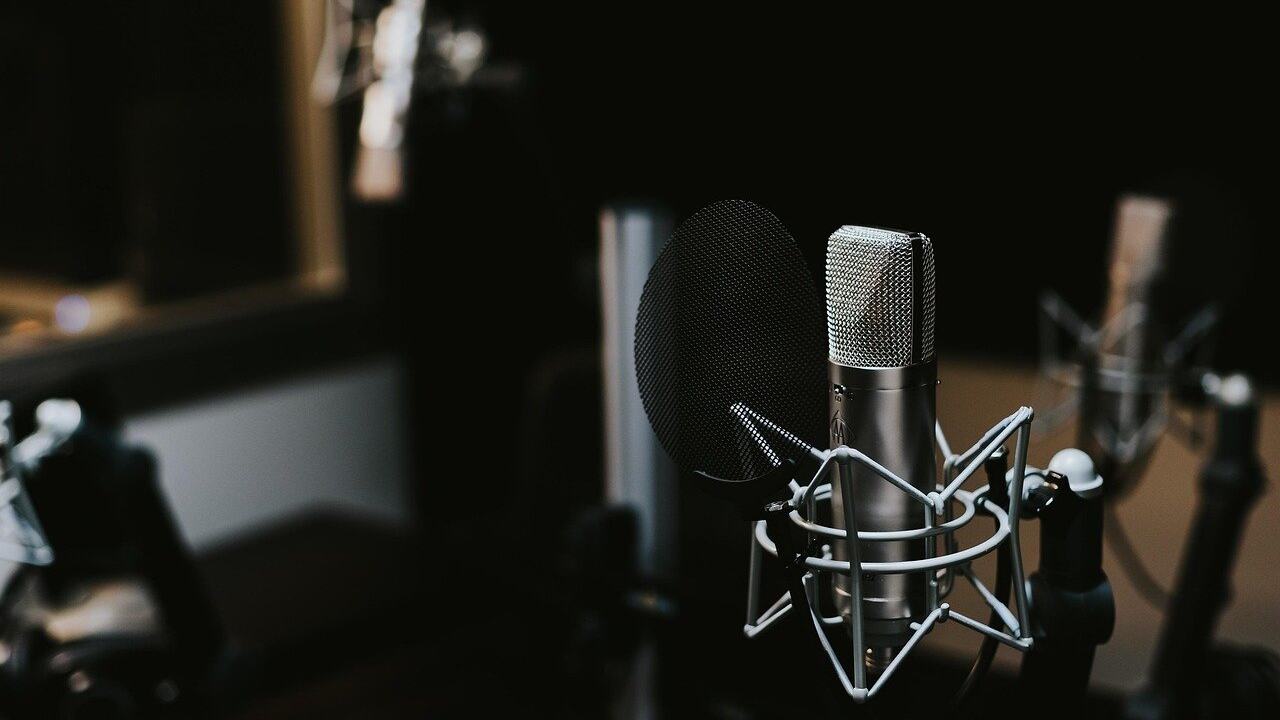
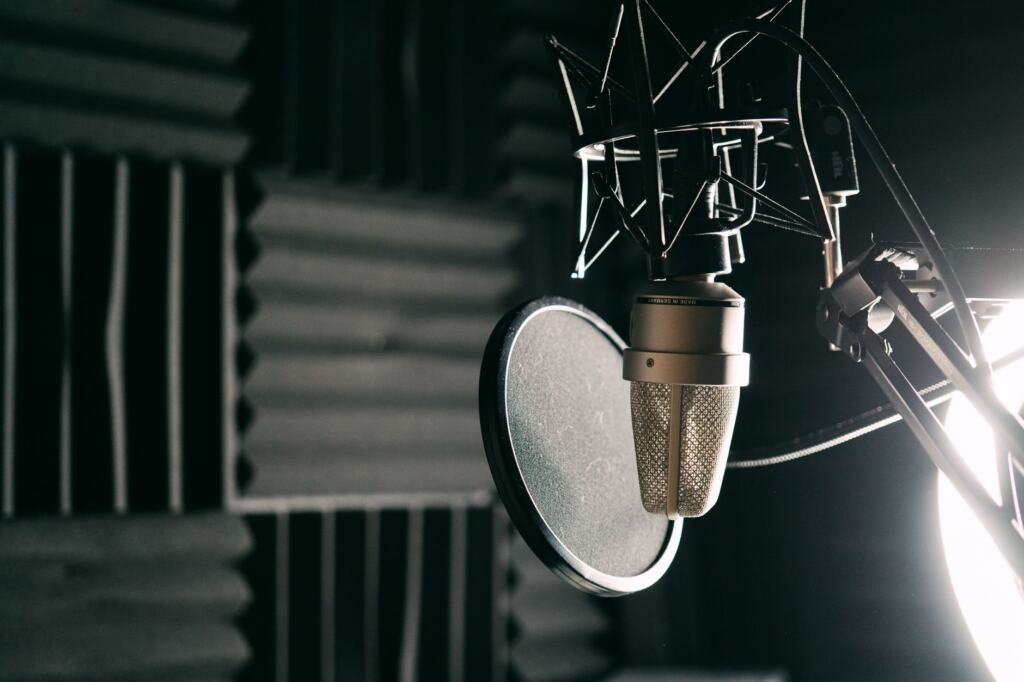
In practice, solve the room before you upgrade the mic. A noisy or reflective room undermines even a very low self-noise rating, so a mid-priced mic in a quiet space will usually serve you better than an expensive one in a poor space. Acoustic foam and a pop filter, as seen on the treated setup below, are typical parts of a treated vocal space.
Price tiers and what to buy first
The justaskjimvo.studio guide sorts XLR recommendations into a tier of $200 or less and a tier of $200 to $500. The author has since revised which models they recommend, so treat named models as examples of each tier and check current versions before buying.
- Starter USB. Movo’s listings run from $19.95 to $34.95 for USB models; suits a first demo reel and low-stakes auditions.
- XLR at $200 or less. The Audio-Technica AT2035 is the least expensive XLR mic the guide recommends. Budget for an interface on top.
- XLR from $200 to $500. Worth it when your room is already quiet and you can hear what the cheaper mic is holding back.
- Bundles. A kit that adds a pop filter and shock mount saves buying accessories separately and makes comparing prices fairer.
Frequently asked questions
Can I run a long XLR cable to my recording space?
Yes. The justaskjimvo.studio guide says you can run audio through a long XLR cable without audible degradation, citing runs of 50 ft or 100 ft, and notes this helps you place the recording space away from noise (guide).
Can I try a budget mic before committing?
Movo states you have a full 30 days to try its products and backs them with a 1-year limited warranty. That applies to Movo products only, so check the terms of any other seller (Movo).
Do mic kits include a pop filter?
Some do. The Rode NT1 kit comes with a cable, pop screen, mic and shock mount, and the SE Electronics X1S package includes a shock mount and pop screen (guide).