YouTube channel ideas help creators focus effort and grow faster. This guide gives practical, actionable advice so readers can pick a niche, validate it quickly with low-cost tests, and scale sustainably. You’ll get a framework for matching ideas to personal goals and resources, a categorized list of 25 channel concepts organized by production effort and typical monetization paths, step-by-step validation tests you can run in days, and a repeatable playbook for starting fast, building momentum, and turning early growth into longer-term scale. Wherever possible the guidance emphasizes repeatability, measurable experiments, and ways to conserve time and budget while improving creative output.
Key Takeaways
- Choosing the right youtube channel ideas starts with setting clear goals (income, influence, portfolio, or hobby) and mapping those goals to available time, budget, and skills. Use simple keyword and competitor checks to assess demand.
- 25 channel concepts are grouped by production effort and monetization potential — from low-cost voiceover lists and short-form commentary to high-investment scripted series and documentaries.
- Validate ideas with three low-cost experiments: search/keyword sampling, a short-run micro-content test, and a landing-page or interest capture test. Use quick metrics to decide whether to iterate or pivot.
- Start fast by batching production, creating a realistic content calendar, optimizing metadata for search, and crossposting short clips to multiple platforms to drive viewers back to your channel.
- Scale by engaging initial viewers, tracking retention and CTR, gradually introducing monetization (ads → affiliate → sponsors → products), and reinvesting earnings into production and promotion at predictable break points.
How To Choose The Right YouTube Channel Idea For Your Goals
Start by writing a one-sentence goal for the channel: what you want it to achieve and why. Common goals include earning side income, building a personal brand, showcasing a portfolio, or pursuing a creative hobby without pressure to monetize. Next, inventory your constraints: hours per week, budget for gear or travel, and skills (on-camera presentation, editing, research, scriptwriting, or audio production). Map ideas to constraints so you don’t pick a concept that requires full-time travel when you only have weekends.
Then evaluate fit across three dimensions: personal fit (interest and sustainability), audience demand (searches, trends, and existing channel sizes), and monetization potential (ads, affiliates, sponsors, or products). A simple scoring sheet helps: list potential ideas, give 1–5 scores for each dimension, and total them to prioritize. For each top idea, define a 30-day content sprint: tentative topics, one-week production plan, and two measurable success criteria (e.g., average view duration, subscriber growth, or convertible email signups). Narrow to three candidates and run quick tests described below to pick the best one.
25 YouTube Channel Ideas Categorized By Production Effort And Monetization
This section groups practical youtube channel ideas by effort and likely monetization. For each idea we include why it works, typical short-term post formats, and the most common monetization routes so you can choose ideas that match your resources and goals.
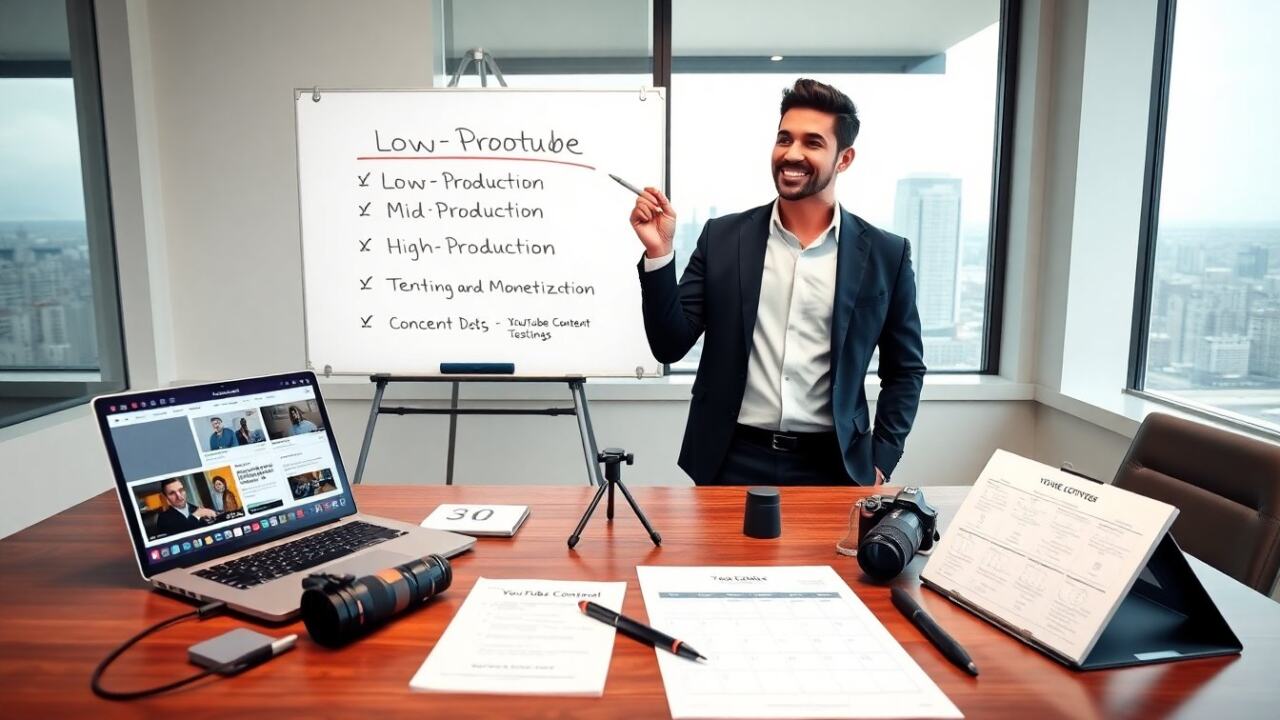
Low-Production Ideas (Quick To Launch, Low Cost)
- Voiceover list videos — create narrated countdowns or compilations using royalty-free visuals and stock clips. Typical posts: 8–12 minute listicles or short-form top-5s. Monetization: ads and affiliate links.
- Reaction clips — film concise reactions to trending clips or news with minimal setup. Typical posts: 1–5 minute takes optimized for shares. Monetization: ads and sponsorship reads as audience grows.
- Commentary on news — daily or weekly roundup of industry or niche news with your perspective. Typical posts: short summaries with one strong opinion or takeaway. Monetization: ads, Patreon, and sponsorships.
- Tutorials with screen capture — teach software workflows, coding snippets, or productivity hacks using screen recording. Typical posts: step-by-step how-tos with clear timestamps. Monetization: course funnels, affiliate tools, and ads.
- ASMR and simple audio — focus on high-quality sound recording; visuals can be minimal. Typical posts: ambient or roleplay clips. Monetization: ads and memberships.
- Podcast clips — repurpose longer audio interviews into short highlight clips optimized for discovery. Typical posts: best-of moments or topic teasers. Monetization: sponsorships and paid memberships.
Mid-Production Ideas (Regular Editing, Growing Audience Potential)
- How-to series with b-roll — episodic projects that show process over multiple episodes. Typical posts: multi-part builds or tutorials. Monetization: ads, sponsors, and digital courses.
- Product reviews and unboxings — honest testing and comparisons in a niche (tech, beauty, tools). Typical posts: in-depth reviews and buyer’s guides. Monetization: affiliate links and brand deals.
- Niche vlogs — daily or weekly life vlogs centered on a hobby or profession (artisan, student, remote worker). Typical posts: behind-the-scenes and routine videos. Monetization: ads, merch, and memberships.
- Educational explainers — break down concepts with graphics and clear scripts. Typical posts: explainer animations or narrated whiteboard videos. Monetization: ads, sponsorships, and course sales.
- Cooking or craft shows — recipe walkthroughs or step-by-step craft tutorials with planned shots. Typical posts: formatted episodes with clear recipe cards. Monetization: ads, affiliates, and sponsored ingredients/tools.
- Fitness routines and short workouts — guided sessions filmed with basic multi-angle setups. Typical posts: 10–30 minute routines and quick clips for social. Monetization: memberships, coaching, and affiliate gear.
High-Production Ideas (Bigger Investment, Higher Scale Potential)
- Short films and scripted series — story-driven content with higher production values. Typical posts: episodic releases and festival-style trailers. Monetization: licensing, premium sponsorships, and paid distribution.
- Travel documentaries — destination-led storytelling with logistics and storytelling planning. Typical posts: themed mini-series on regions or cultures. Monetization: sponsorships, affiliate travel gear, and ads.
- Tech deep dives and labs — hands-on testing, tear-downs, and benchmark content requiring equipment. Typical posts: long-form tests and comparative guides. Monetization: sponsorships, consulting, and brand partnerships.
- Large-scale cooking competitions — produced events with multiple cameras and participants. Typical posts: rounds and highlight reels. Monetization: brand integration, sponsorship, and event ticketing.
- Mini-documentaries on people or trends — researched profiles with archival footage and interviews. Typical posts: long-form episodes with supporting clips. Monetization: licensing, sponsorship, and crowd-supported funding.
Simple Tests To Validate Your Channel Idea Before You Commit
Run three focused, low-cost experiments to validate any youtube channel ideas before investing heavily.
- Keyword test: Search YouTube and Google for a handful of target queries related to your idea. Note competing video view counts, upload recency, and comments to gauge active interest. Identify 5–10 searchable video topics that already attract views but aren’t dominated by large channels.
- Micro-content test: Produce a short batch of 5–10 videos (or shorts) around those topics and publish them over two weeks. Track impressions, click-through rate, average view duration, and subscriber conversion. Use the data to see which topics show consistent retention and engagement.
- Landing-page or interest capture test: Create a lightweight signup or interest page describing the channel and a proposed lead offer (cheat sheet, recipe PDF, or short mini-course). Promote it organically in relevant forums and with a small paid test if you wish. Low-cost signups indicate market demand beyond passive views.
Complement these tests with qualitative feedback: ask potential viewers in niche communities what problems they want solved, and invite early commenters to participate in future ideas. Decide on a go/no-go after 30–45 days using predefined success metrics (e.g., consistent watch time above a threshold, steady subscriber growth, or meaningful email signups). If metrics fall short, iterate the content angle or pivot to the second candidate from your shortlist.
How To Start Fast, Build Momentum, And Scale Your Channel
To start fast, choose a minimum viable format you can produce consistently (shorts, list videos, or 5–10 minute tutorials). Create a simple publishing calendar that matches your real available hours — consistency beats perfection in early stages. Batch-produce content (record multiple videos in one session and schedule edits) to avoid burnout. For each video, follow a checklist: hook in first 5–10 seconds, clear value proposition, 1–2 calls to action, and a branded thumbnail that highlights the topic.
Build momentum by optimizing for discovery: use keyword-driven titles, concise descriptions with chapters and links, and custom thumbnails that increase click-through rate. Crosspost short clips to social platforms to funnel viewers to full videos. Engage with the first 100–1,000 viewers by replying to comments, asking for feedback, and inviting them to exclusive updates (email list or community tab). Track weekly metrics: views, watch time, CTR, average view duration, and subscriber rate per video. Use those metrics to double down on topics that retain viewers and adjust thumbnails or titles that underperform.
As revenue appears, follow a staged monetization strategy: enable ads first, add affiliate links for relevant products, negotiate small sponsorships on strong-performing series, and consider memberships or digital products for committed fans. Reinvest a portion of earnings into higher-quality gear, targeted promotion, or outsourcing repetitive tasks (editing, thumbnail design, or captioning) once that spending is sustainable. Finally, create a 90-day roadmap that moves from experimentation to optimization and then to scale, with clear checkpoints to measure whether you should invest more, iterate, or expand to adjacent topics.