A wedding content creator helps couples capture moments and tell stories. The wedding content creator creates photos, short videos, and social media reels that show emotion and detail. The wedding content creator helps venues and planners present their work to new clients. This guide shows skills, tools, portfolio steps, pricing ideas, and marketing tactics to help a creator grow bookings and income in 2026.
Key Takeaways
- A wedding content creator captures emotional moments through photos, videos, and social reels to help couples preserve and share their special day.
- Essential skills include visual composition, timing, people skills, quick editing, and using equipment like full-frame cameras, prime and zoom lenses, and wireless mics.
- A streamlined editing workflow with consistent color grading and various social media formats ensures quality and efficient delivery of wedding content.
- Building a diverse portfolio showcasing full-day coverage and micro-stories, combined with clear, tiered packages and researched pricing, attracts more clients.
- Targeted marketing includes posting emotional reels, collaborating with venues and planners, leveraging local SEO, running social campaigns, and attending bridal events to grow bookings and income.
What A Wedding Content Creator Does And The Value You Bring To Couples
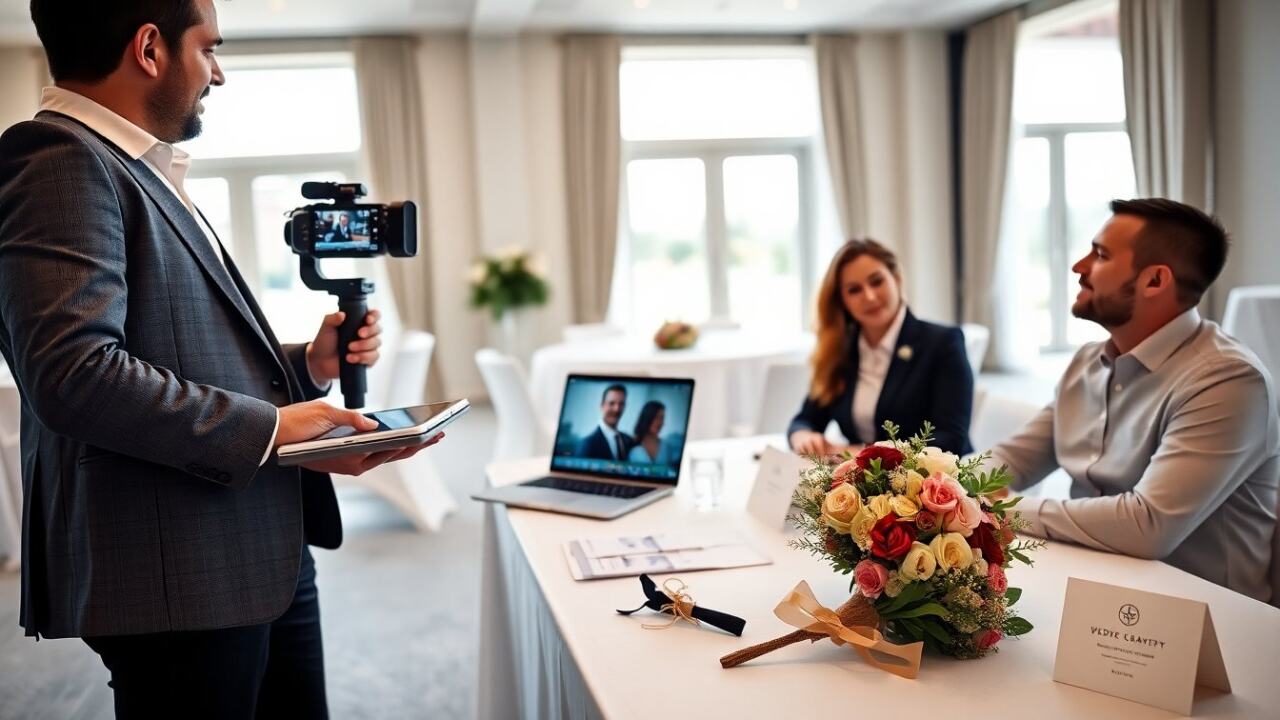
A wedding content creator documents a wedding day with visual and narrative focus. They shoot candid moments, portraits, venue detail, and short cinematic clips. They edit files to create highlight reels, social posts, and album-ready images. They help couples preserve memories and share them with family. They help couples reduce stress by delivering clear timelines and final assets. They help venues increase bookings by providing shareable media. They help planners show event flow and vendor work. Couples hire a wedding content creator for emotion, speed, and social-ready media.
Core Skills, Style, And Essential Equipment For High-Impact Wedding Content
A wedding content creator needs visual composition, timing, and people skills. They need light control, exposure decisions, and sound basics for video. They need quick editing skills and social format knowledge. They need a consistent style that matches client taste. They need to set expectations and manage time on the day. They need a client-friendly process from contract to delivery. For equipment, they need at least one full-frame mirrorless camera, a fast prime lens, a zoom lens, and a compact gimbal for video. They should have spare batteries, fast cards, and a laptop for backup. They should invest in wireless mics for vows and a reliable portable drive for files.
Recommended Starter Kit And Editing Workflow
A practical starter kit helps a wedding content creator deliver quality work from day one. The kit should include one full-frame camera body and a second body for backup. The kit should include a 24–70mm zoom and a 50mm or 85mm prime. The kit should include a lightweight gimbal and two wireless lavalier mics. The kit should include neutral-density filters and a small LED panel. The editing workflow should follow a clear order. First, import and backup files to two locations. Second, do a fast select pass and mark favorites. Third, apply color grading presets to create a consistent look. Fourth, edit a 60–90 second highlight reel focused on emotion and pacing. Fifth, export social versions (vertical and square) and deliver full-resolution images and raw exports on request. This workflow helps the wedding content creator save time and keep quality consistent.
How To Build A Portfolio, Packages, And Pricing That Sell
A wedding content creator should build a portfolio that shows full days and micro-stories. They should show ceremony moments, portraits, detail shots, and a short highlight video. They should publish work on a simple website and on social channels. They should add client testimonials and clear service pages. For packaging, a creator should offer three clear tiers: a basic social bundle, a full-day bundle, and a premium bundle with prints or albums. The creator should define deliverables and delivery timelines for each tier. For pricing, the creator should research local rates and set a clear hourly or flat day rate. The creator should add a travel fee for out-of-area weddings. The creator should offer add-ons such as second shooter time, raw files, or same-day social edits. The creator should use limited-time incentives or small discounts for weekday bookings. The creator should review pricing yearly and raise rates as demand grows.
Marketing Tactics To Attract Couples, Venues, And Planners
A wedding content creator should use targeted marketing to reach couples, venues, and planners. They should post consistent reels that show emotion and process. They should tag venues and vendors and add concise captions with call-to-action details. They should ask venues and planners to display sample media in their client areas. They should offer a trade: free styled shoot images in exchange for venue promotion and vendor cross-posts. They should collect reviews and feature them on service pages. They should use local SEO by listing services with city and venue names in page titles and meta text. They should run small paid social campaigns targeting engaged users within a radius. They should attend vendor nights and local bridal shows to meet planners and venue staff in person. They should build a referral process and offer a small referral fee or gift to partners who send clients. These steps help a wedding content creator increase inquiries and bookings.