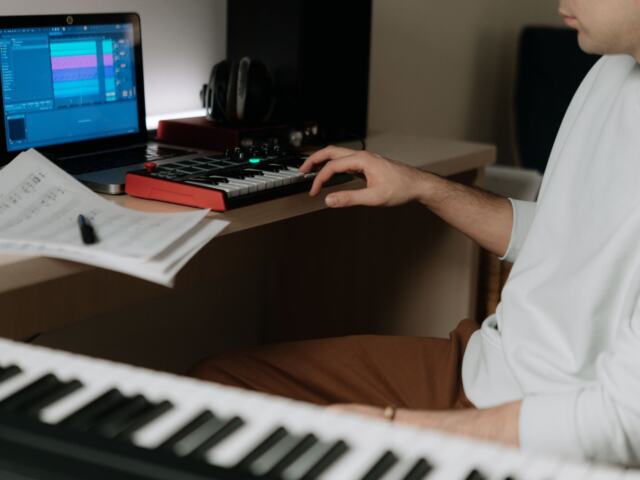
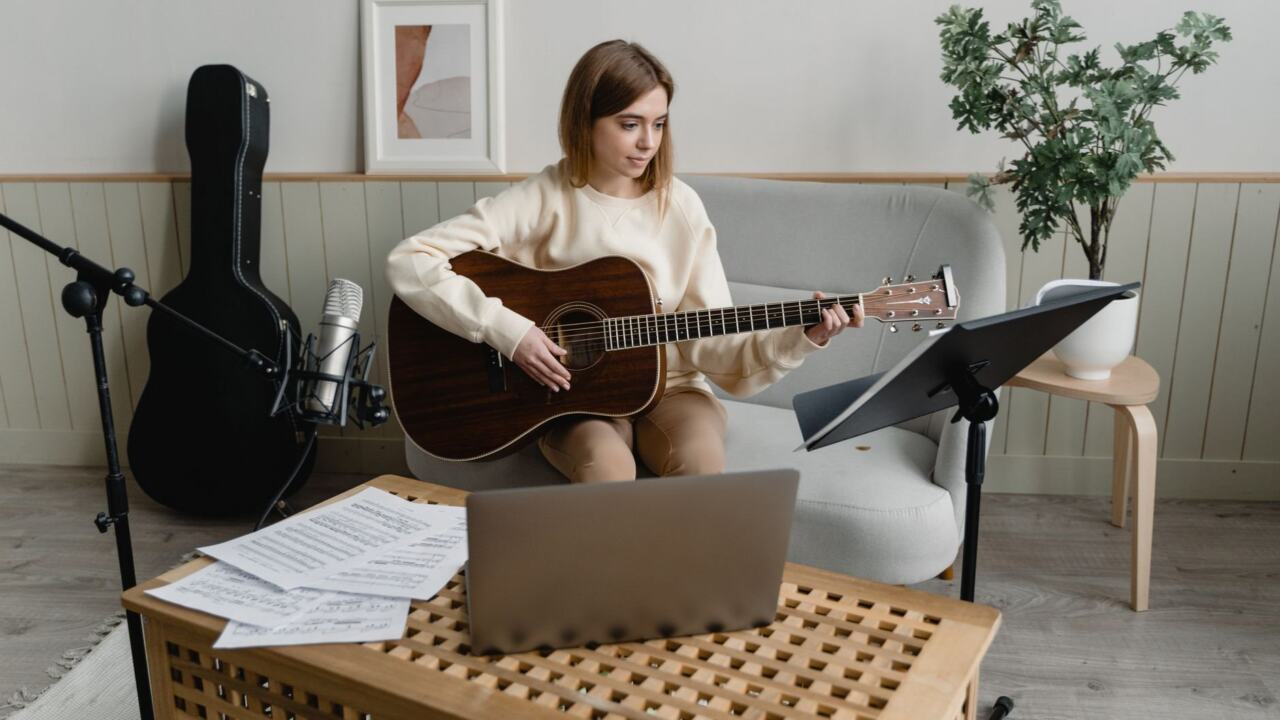
A beginner opens a DAW, stares at an empty project and assumes real producers need a full studio first. In practice, how to make music starts with a computer, a DAW and good headphones, then a finished rough song.
Independent artists can pair this workflow with the wider live music culture around gigs, tours and releases. The sections below cover common misunderstandings, the stages of a song, writing basics, tool choices and finishing.
Common misunderstandings about starting
Most stalled projects come from three beliefs: that gear must come first, that theory must be mastered before writing, and that the choice of DAW decides whether a song succeeds. The evidence points the other way. A small setup, a little theory picked up while writing, and a DAW that suits how you work are enough to begin.
| Misunderstanding | What works instead | Planning use |
|---|---|---|
| You need a full studio before you begin | The minimum is a computer, a Digital Audio Workstation (DAW) and a good pair of headphones | Start with what you own and add gear only when a recording task demands it |
| You must master theory first | Even a basic grasp of theory can grant freedom and direction | Learn a few chord progressions while writing a real song, not in advance |
| You must pay for the right DAW | GarageBand and BandLab are free, and testing several DAWs before committing helps you find the best fit | Trial a few, then keep the one that matches your creative process |
These points draw on a beginner music production guide and a guide to making music and choosing a DAW.
The real pitfall is collecting tools instead of finishing songs. Each unfinished idea teaches less than a completed rough track, so treat gear as a response to a specific problem.
A compact idea-to-release workflow
Music production covers several stages: songwriting, arranging, recording, mixing and mastering. For an independent artist, a release step follows. Working through them in order keeps each song moving.
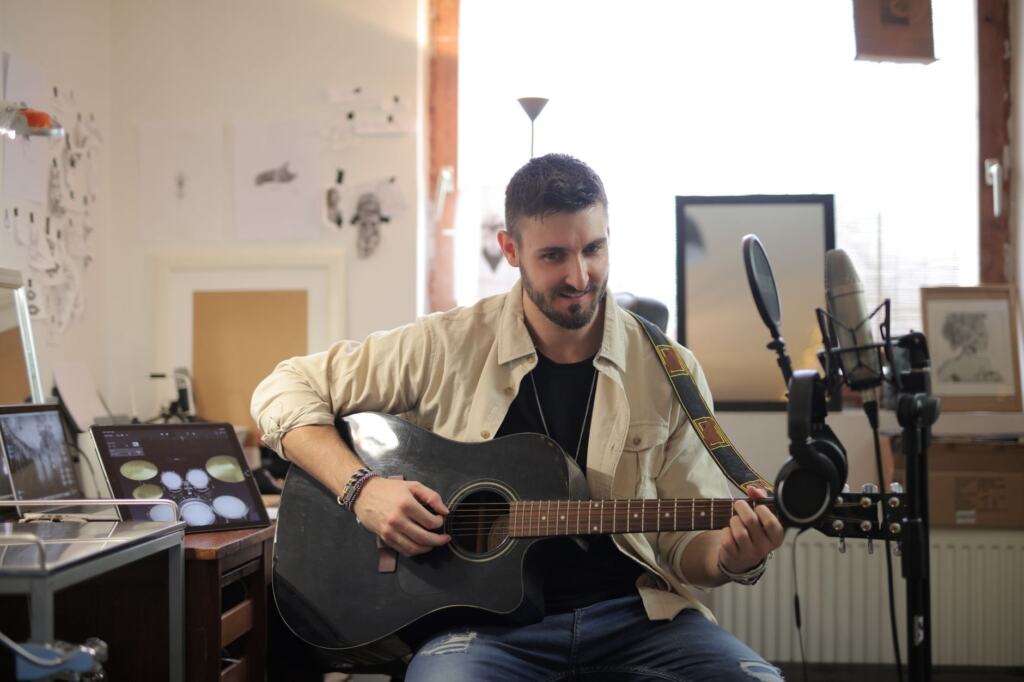
- Write. Build a bassline or chord loop, then find a melody over it.
- Arrange. Decide the sections of the song and which parts play in each one.
- Record. Capture vocals and instruments, or program the parts inside the DAW.
- Mix. Balance the recorded parts so the lead idea stays clear.
- Master. Give the finished mix its final polish before it leaves your computer.
- Release. Upload the finished song with artwork and credits through a distributor of your choice.
If you want this workflow spread over a longer practice plan, How to Learn Music Production: A Practical 90‑Day Roadmap for Beginners (2026) – Voiceoriginals turns the same skills into a schedule.
Writing the song
Writing combines a melody, the chords that support it and a structure that gives the song shape. Treat them as a loop rather than a sequence: change the chords and the melody feels different, and a new melody may call for new chords.
Melody ideas that get you moving
Producer-focused melody advice offers practical entry points when a blank piano roll feels intimidating.
- Start from the bass. Writing bassline notes first sets your key, so every later note has a home.
- Hum over what you have. Play the existing parts and hum a melody to it, then keep whatever sounds natural.
- Repeat notes on purpose. A repeating note can be set every 1/16, 1/8 or 1/4 note, even every 1/2 note, which gives a line a steady pulse.
- Loosen the timing. Offsetting notes a couple of milliseconds offbeat can make a programmed line feel less rigid.
Chord progressions and mood
Chords provide the harmonic support for melodies, and chord progressions set the mood and tone of a song. A few established patterns are enough for a first song:
- I-V-vi-IV is described as a staple of pop music.
- I-IV-V is a classic that has been used across multiple genres.
- ii-V-I is found extensively in jazz.
Play your melody over each option and keep the progression that matches the feeling you want. Progressions can also be exported as MIDI files and tried on DAW instruments, which lets you audition sounds without replaying the chords by hand.
Song structure
The basic structure of a song includes the intro, verse, pre-chorus, chorus, bridge and outro, and verse-chorus form is the one heard most often in contemporary popular music. Verses change their lyrics, while the chorus keeps the same lyrics each time it returns. That repetition is what lets listeners recognise it. For a first song, a verse-chorus layout is the safest template. Add a bridge only if the song needs a change of scene.
Choosing a DAW
A DAW is the software where you record, sequence, edit and mix. The best first choice is a free one you will actually open. GarageBand and BandLab are free and offer a good starting point for beginners. Popular paid options include Ableton Live, Pro Tools, Logic Pro and FL Studio.
Compare them by how they fit your creative process. Ableton Live is a favourite among electronic music producers for its intuitive live performance functions, so it suits loop-based and performance-minded writers. Testing multiple DAWs before committing is worthwhile, because the one that matches how you think will get used.
Home studio gear and room
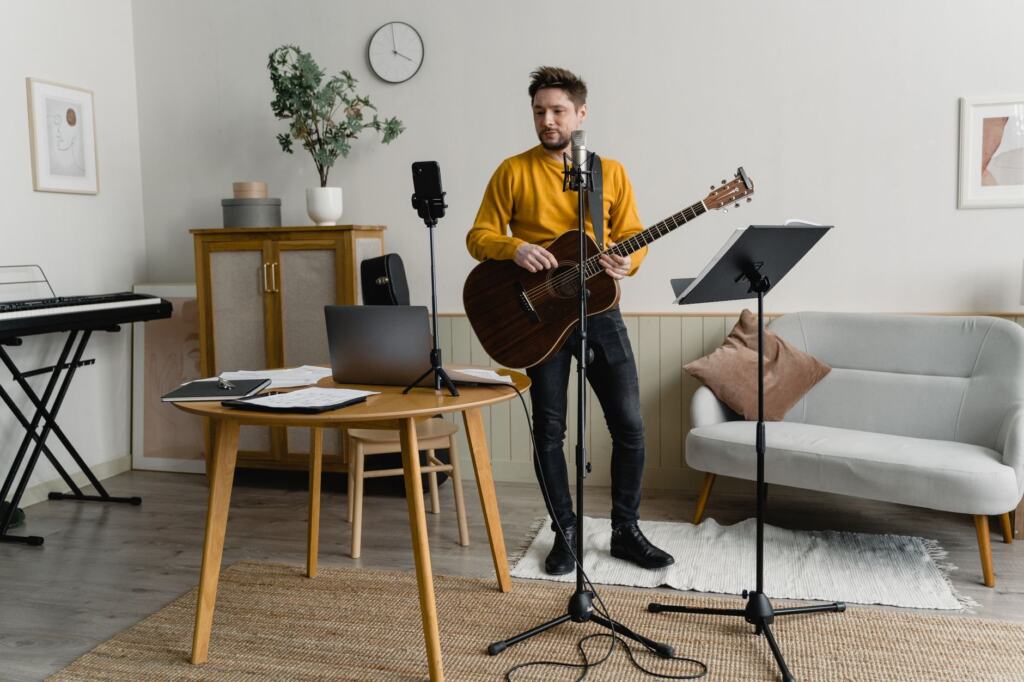
Producing songs at home needs a computer, a DAW and good headphones, and a few upgrades that make recording easier. According to the same beginner production guide, the main additions are an audio interface, studio monitors and a microphone.
- Computer. Aim for at least 8GB of RAM, ideally 16GB, a 4-core processor and an SSD as the primary drive.
- Audio interface. It is crucial for connecting microphones and instruments to your computer. The Focusrite Scarlett 2i2 is cited as a popular beginner choice for its reliability and ease of use.
- Monitors. For most home studios, monitors with 5 or 6-inch drivers are sufficient.
- Headphones. They are part of the minimum setup, so they are the sensible first purchase, ahead of monitors.
- Room. Avoid low ceilings and square shapes, which can cause sound issues, and use materials such as foam panels to minimise reflections.
If a spare room is not available, headphones are the more dependable choice, since monitors depend on the room around them. Add an interface and microphone when you want to record vocals or guitar.
Finishing and releasing
Mixing and mastering are the last two production stages, and they only matter once a song has a complete arrangement. Finish a rough version of every track before polishing any of them. A short list of completed songs teaches more than one endlessly adjusted project.
For release, pick a distributor and follow its upload requirements for audio files, artwork and credits. Keep the final project saved so you can return to it. Once songs reach the stage, the guide to the best earplugs for concerts covers protecting your hearing at gigs.
Frequently asked questions
| Question | Answer |
|---|---|
| How do I start making music? | Open a free DAW such as GarageBand or BandLab, write a bassline or chord loop, and hum a melody over it. Work through the production stages in order: songwriting, arranging, recording, mixing and mastering. |
| What do I need to produce songs at home? | At minimum, a computer, a DAW and good headphones. An audio interface, monitors and a microphone are the usual next additions. |
| How long should a verse be? | A consistent length is the goal, and 16 or 32 bars is typical. |
| What is 32-bar form? | It splits a song into four sections of eight bars, structured AABA, according to Native Instruments. |