
How to become a youtuber is a common question in 2026. This guide shows clear steps to start, grow, and earn from a YouTube channel. It explains audience choice, content planning, gear, and promotion. It uses plain language and direct advice. The reader will get a practical path they can follow in the first 90 days.
Key Takeaways
- Starting a YouTube channel requires choosing a clear niche to attract and retain the right audience effectively.
- Focus on creating quality content with good audio and lighting before investing in advanced gear to improve viewer engagement.
- Use SEO tactics like search-focused titles, keywords, and eye-catching thumbnails to increase video visibility and growth.
- Plan your channel brand and content strategy with a consistent upload schedule and diverse video types for sustained audience interest.
- Monitor performance metrics such as views, watch time, and subscriber changes weekly to refine your approach and reach milestones.
- Explore multiple income paths including ad revenue, sponsorships, and product sales to monetize your YouTube channel successfully.
Why Start A YouTube Channel Today — Opportunities And Realistic Expectations
YouTube gives reach and recurring views. Creators can earn ad revenue, sponsorships, and product sales. Many viewers still use search to find help and entertainment, and creators can build lasting audiences. Starting a channel takes time and steady work. Expect slow growth at first. Set a six-month goal for audience feedback and a one-year goal for stable upload rhythm. They should track views, watch time, and subscriber change each week.
When you ask how to become a youtuber, it helps to frame the effort as a long-term creative business rather than a one-off hobby. Early weeks are about consistency: publishing, learning, and iterating. In months 3–6 you will refine thumbnails, tighten scripts, and learn which topics attract watch time. By month 12 you should have reliable production habits and clear data on what formats perform best.
Realistic expectations: you will likely spend more time planning and editing than filming at first. Growth is driven by audience retention and search relevance — not just raw views. Prioritize content that answers specific questions, solves problems, or entertains a defined audience instead of trying to reach everyone at once.
Choose Your Niche And Define Your Target Audience
They should pick a niche that matches skills and interest. A clear niche helps the algorithm and viewers decide to subscribe. They should name the core topic and one or two subtopics. They should state who the videos serve and why those people will watch. This clarity guides topic choice, tone, and thumbnail design. They should avoid a too-broad channel focus in the first year.
Practical steps to narrow a niche:
- Write down three topics you enjoy and three topics you know at least one practical thing about.
- Combine one passion with one skill to form a workable niche (for example: beginner home workouts + 10-minute sessions).
- Define a target viewer persona: age range, skill level, primary pain point, and where they search for help.
Keep the niche flexible enough to pivot: you can expand subtopics as audience signals show which videos perform best. The goal is to make it immediately obvious to a new visitor what problem your channel solves.
How To Research Topics, Competitors, And Audience Demand
They should list ten topic ideas and search each on YouTube. They should note top videos, view counts, and upload frequency. They should read comments to learn viewer questions. They should use keyword tools to check search volume and related queries. They should pick topics with steady demand and room for a unique angle. They should save examples of good thumbnails and clear titles for reference.
Concrete research routine:
- Search each topic and open the top 8–10 videos. Note average view totals and the common title formats.
- Scan comments and pinned comments for repeated requests — these are direct prompts for future videos.
- Record common keywords and sample title structures in a spreadsheet so you can reuse effective phrasing.
- Identify one competitor channel that consistently performs well and one small channel that targets the exact audience you want; study both for ideas and differentiation.
Decide on a minimum viability test: commit to producing five videos on a chosen topic and compare performance to other topics. Use this small test to validate demand before building out a long-term calendar.
Plan Your Channel Brand And Content Strategy
They should pick a simple channel name that matches their niche. They should create a short channel description that answers who the channel helps and what it offers. They should design a banner and a logo that read well on mobile. They should plan a content mix: pillar videos, quick wins, and occasional experiments. They should map ten video ideas and a three-month content calendar to test performance.
Content strategy checklist:
- Pillar videos: in-depth, searchable content that defines your authority on core topics.
- Quick wins: shorter videos that answer a specific question or show a single actionable tip.
- Experiments: occasional shifts in format (live streams, collaborations, or storytelling) to test new audience segments.
Publishing cadence: start with a schedule you can keep (one video per week is a common starter). Batch-record when possible and keep an editorial calendar with publish dates, thumbnail concepts, and CTAs. Plan end screens and playlists to funnel first-time viewers into more of your content — this increases session watch time, which the algorithm favors.
Production Essentials: Simple Gear, Filming Techniques, And Editing
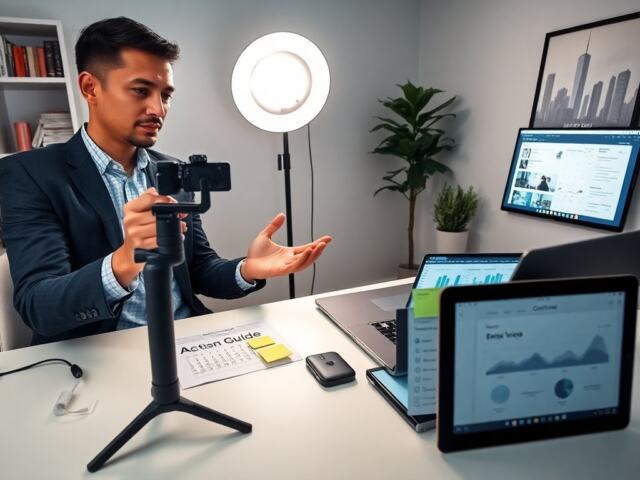
They need clear audio before fancy camera gear. A good lavalier or USB mic will improve watch time. They need soft light and a stable camera or phone mount. They should frame the subject at eye level and keep backgrounds uncluttered. They should record a short test clip to check sound and light. They should learn basic editing: cut pauses, add B-roll, and insert clear calls to action. They should export at YouTube-friendly settings and add captions.
Step-by-step production workflow:
- Pre-production: write a one-page outline, craft a strong hook for the first 10–15 seconds, and list 3–4 key takeaways the viewer should leave with.
- Setup: test audio and lighting, choose a simple background, and check framing. Record a short test and listen with headphones.
- Filming: record slightly more footage than you think you need. If you mess up a line, pause and retry — edits are easier than reshoots.
- Editing: tighten pacing, add B-roll to illustrate points, include on-screen text for key facts, and add chapter markers if the video is long.
Editing ways to save time: use templates for intro/outro, keep a short music library that fits your brand, and create a thumbnail template so each image is quicker to produce. Always export a review copy before uploading to check color, audio levels, and caption sync.
Growth, Distribution, And Monetization: SEO, Thumbnails, And Income Paths
They should write search-focused titles and use strong keywords in the first 125 characters of the description. They should add 5–8 relevant tags and a clear pinned comment with links. They should craft thumbnails that show emotion and a large, readable phrase. They should post new videos to social posts and short clips to reach more viewers. They should pursue ad revenue, affiliate links, sponsorships, and digital products. They should track RPM, click-through rate, and audience retention to decide which income path to scale.
Practical distribution tactics:
- Optimize the first 48 hours: share the video with your community, post in one or two relevant forums, and pin the video in social bios for a short push.
- Create short-form clips from your long videos for Reels/Shorts to drive channel awareness and retarget viewers to full videos.
- Use playlists to organize content into logical viewing journeys that increase session time and retention.
Monetization roadmap:
- Stage 1 — Build audience and minutes: focus on discoverability, playlists, and retention.
- Stage 2 — Monetize attention: enable ads and experiment with affiliate links relevant to your niche.
- Stage 3 — Diversify income: pitch small sponsors, create a simple digital product or paid resource, or add memberships/patreon-style perks for engaged fans.
Key metrics to review weekly: views by video, average view duration, audience retention graphs (where viewers drop off), click-through rate on thumbnails, and subscriber change. Use these signals to iterate: if retention drops at a specific point in many videos, test a different structure or stronger hook.
Summary tip: when considering how to become a youtuber, focus less on viral luck and more on repeatable practices — consistent publishing, improving retention, and building a small but loyal audience is the most reliable path to growth and sustainable income.