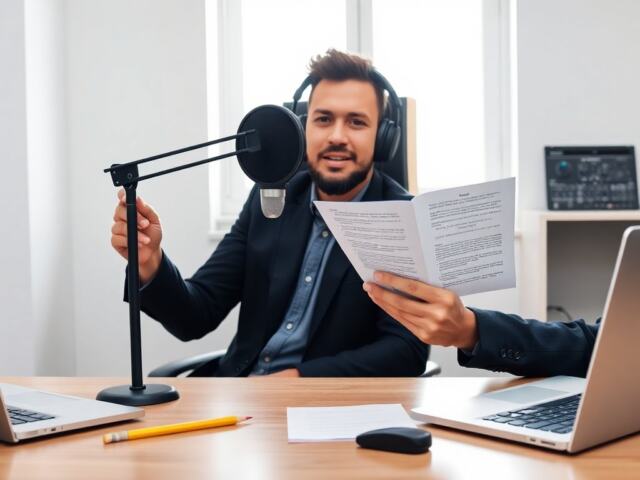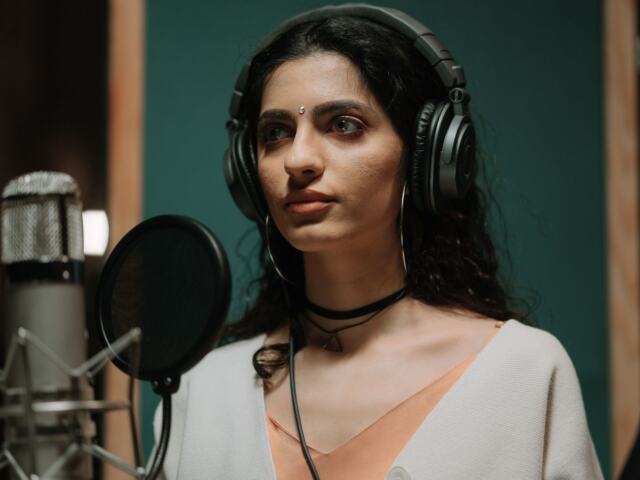

To learn how to become a voice over actor, build your acting and script-reading skills first, record a short demo, set up a quiet home studio, then audition steadily on casting platforms. Early on, most people also need other income.
This roadmap follows the order in which each stage makes the next one work. It sits within our wider coverage of audio media and podcasts.
What voice-over work involves
Voice-over is a performance job first and a technical job second. Berklee’s careers guide lists the range of work: audiobooks, commercials, documentaries, educational videos, corporate promotions, apps, phone prompts, video games and animation. Each format rewards different strengths, so pick a likely first niche before you spend money on training or a demo.
The same Berklee guide names the skills that apply across all of them: character work, vocal technique, diction, fast copy reading, breath control, microphone technique and recording and editing software. Working voice actor Steve Blum makes the priority plain: the ability to act matters even more than the funny voices you can create. If you are drawn to the field because you can do impressions, plan to put your practice time into interpreting a script and making choices.
Set your expectations about income early. Berklee notes that voice-over artists at the start of a career are unlikely to find enough work to support themselves from voice-over alone, so side gigs are common. Treat the first phase as building a second income stream rather than replacing a job.
Training and coaching
Training turns raw voice quality into reads that clients will book. Start cheaply: Blum advises recording yourself on any recorder, beginning with what is easy and natural for your voice, without straining. Listening back shows you where your reading sounds flat or hurried before anyone else hears it.
A vocal coach shortens that feedback loop. Spotlight’s guide to getting started says that working with a coach clarifies what different reads demand and shows you your strengths and weaknesses. Voice actor Carrie Olsen describes getting coaching before submitting a first audition, joining a casting site or recording a demo. That order is a sound default, because it means your first public work reflects some direction.
Choosing a coach or class
Anyone can call themselves a coach, so vet them. Blum recommends taking classes with industry professionals and getting references from people who have taken them. Olsen suggests asking whether the coach has personally booked work in the current climate and what their goal is for you. A coach who works in the market you want to enter suits you better than a general performance teacher.
Building a demo
Yes, you need a demo, because casting platforms and clients judge you on short audio samples before anything else. The decision is when to make it and how much to spend. Blum warns against paying for a professional reel unless you really think you are ready, and suggests having an agent or professional critique your work first.
Do not expect the demo session itself to teach you the craft. Spotlight points out that demo producers give direction on the day but will not have time to teach you the fundamentals. Do your learning with a coach, then record the demo to show it off.
| Demo element | Guidance | Planning use |
|---|---|---|
| Length | Blum: no more than about 2 minutes, with short bits of each character. The Voice Realm: 60 to 90 seconds | Aim for the shorter range and treat two minutes as a ceiling |
| Order | Best read first, using real scripts rather than filler copy | Lead with the read you most want to be booked for |
| Content mix | Three or four short reads: a commercial, a narration, a conversational read and, optionally, a character | Match the mix to the jobs you will audition for |
| Audio quality | A clean recording room, with any music kept under the voice | Fix the room before recording, since the demo is judged on how clean it sounds |
These figures come from working voice actor Steve Blum’s guide to becoming a voice actor and The Voice Realm’s advice on breaking into online voice-over; the second is an industry training site rather than an official body.
Home studio and gear
The core requirements for remote work are modest. Berklee describes the setup as a computer, a microphone and a strong voice. The Voice Realm adds detail for broadcast-quality work: a quiet room, soft surfaces, a respected microphone and a USB interface. Spotlight puts the cost of an improvised setup with a microphone, pre-amp and editing software at a few hundred pounds.
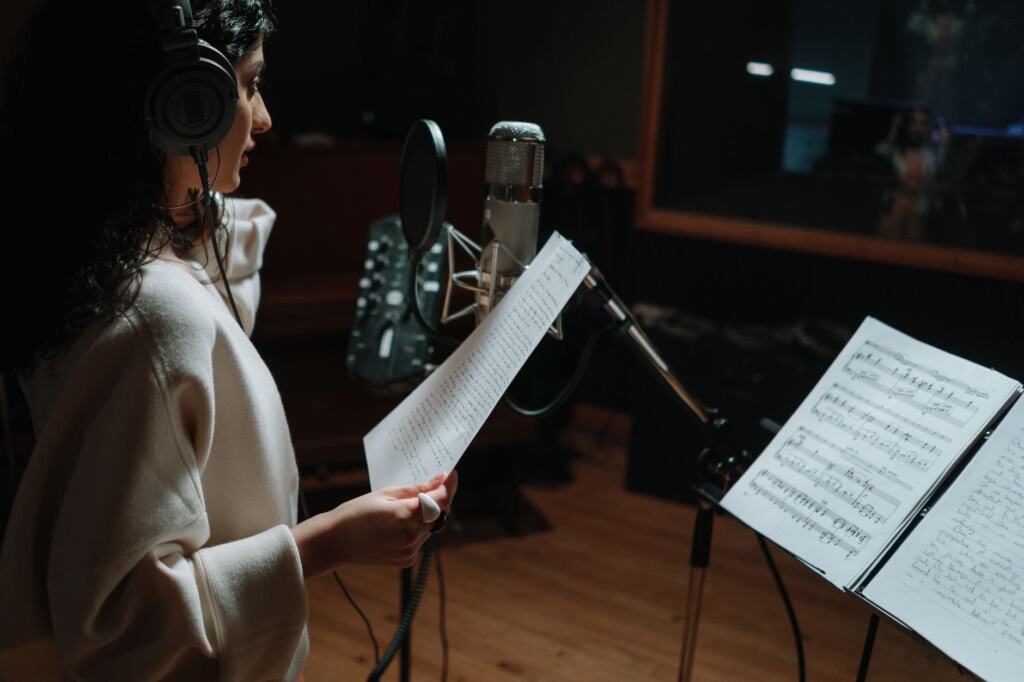
Spend on the room before the microphone. The Voice Realm’s advice is to treat the room before you upgrade the mic, because echo is what clients reject. A modest microphone in a quiet, soft-furnished space beats an expensive one in a bare room, which is why a beginner’s first purchase should be acoustic treatment rather than a better microphone.
Finding your first gigs
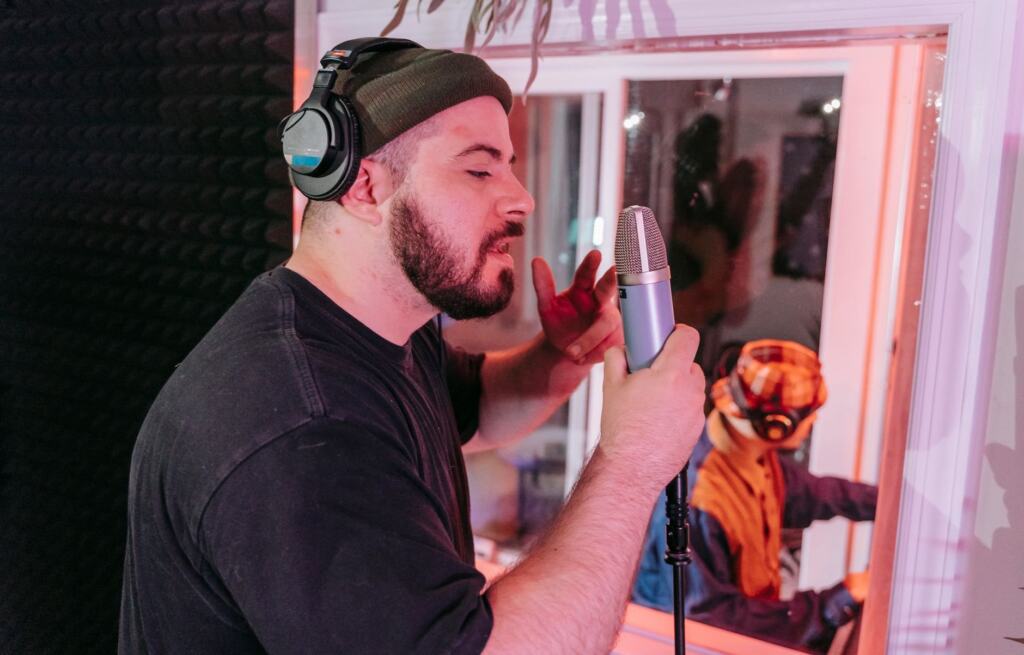
Most newcomers start on online platforms. Berklee notes that most voice actors use online marketplaces such as Voices.com or Voice123, as well as general freelancer sites. On these casting platforms, notices arrive with an estimated rate on each, so you can decide whether a job is worth recording before you invest time in an audition.
Rates vary enormously, and the examples available come from individual working actors rather than market averages. Olsen reports that her first booked job was a $450 two-minute narration, and that some clients will pay only $20 for a radio spot. Use that spread as a reminder to read the estimated rate before you audition and to avoid anchoring on one number.
Expect many more auditions than bookings. Blum reports about 20 auditions for every booked job, based on his own career. That ratio is not a forecast for you, but it explains why a regular audition routine matters more than any single submission. Berklee also lists performer unions, including SAG-AFTRA and Actors’ Equity Association, as organisations to know about as your career develops.
Related niches and formats
If your voice suits a particular regional market, British Voice Over: How To Choose The Right Accent, Style, And Talent In 2026 – Voiceoriginals shows how clients approach that choice from the hiring side. If you also want to produce your own audio, 60 Podcast Topic Ideas To Launch And Grow Your Show In 2026 – Voiceoriginals gives you material to practise on and a place to show your delivery.
How long the roadmap takes
Timelines differ widely. Olsen knows plenty of people who started making real money in less than a year, while others took two to three years or longer. The stages above are the same either way: coaching, a demo that reflects your level, a clean room and regular auditions. What changes the pace is how consistently you audition and how quickly you act on feedback.
Frequently asked questions
Can I make a full living from voice-over right away?
Unlikely. Berklee says early-career voice actors rarely find enough work to rely on voice-over alone, so many keep side gigs while they build a client base.
What is a pay-to-play site?
It is a casting site where you pay a subscription for access to auditions, as Spotlight describes. Marketplaces such as Voices.com and Voice123 are the other common route to auditions.
How soon do I get paid after a casting-platform job?
On the platform The Voice Realm describes, the client pays the site before you record, and you are paid to PayPal between 7 and 45 days after the job closes. Other platforms may differ.
Should I move the microphone in a professional studio session?
No. Olsen advises that the engineer places the microphone exactly where they want it, so leave its position alone and focus on your read.